Why change feels hard (even when it’s for the better)
How a new booking system became an unexpected lesson in psychology, yoga philosophy and learning to embrace change.
Reflections on launching our new booking system
Last week we hit “launch” on our brand new online booking system.
What was supposed to be a quiet, behind-the-scenes upgrade quickly became something much more revealing. As we worked through the troubleshooting, waited patiently for the migration to take place, and then watched as the first few bookings thankfully came in, I could feel it in my body – that familiar low-level anxious feeling of uncertainty.
Will this actually make things easier? Will people find it confusing? Did I just create more work for everyone? Have I made a mistake?
And I know I’m not alone.
Several of you have already reached out with questions or quiet hesitation:
- “Where do I click now?”
- “Do I need a new password?”
- “Can I still just message you like before?”
- “What about PayPal?”
This small shift in how we book our time on the mat has become a living example of something much bigger: why change feels hard, even when it’s positive, well-intentioned and ultimately designed to make life easier.

The psychology of resistance
From an evolutionary perspective, our brains are prediction machines. We love accurate forecasts because they help keep us safe and conserve energy. When something familiar disappears and something new appears in its place, the brain registers uncertainty. And uncertainty is often interpreted as a potential threat, even when the change is objectively helpful.
This is why we experience things like:
- Status quo bias: a deep preference for keeping things the way they are simply because they are the way they are. The old system, with all its quirks, was known. Known feels safe.
- Loss aversion: we tend to feel the potential downsides of change (extra clicks, a learning curve, momentary frustration) more powerfully than the future upsides (a smoother experience, fewer admin headaches and clearer availability).
- Habit energy and cognitive load: booking your class had become almost automatic. Now it requires conscious attention again. That extra mental effort registers as friction.
Why even positive change feels stressful
Even “good” changes create stress.
Classic research into life events shows that any adjustment to our routines – whether it’s a new job, a different commute or even how we sign up for the activities that nourish us – adds to our overall stress load because it demands adaptation.
Our nervous systems don’t immediately distinguish between “this change will help me” and “this change is a threat“. They simply notice that something familiar has changed.
For many of you, the yoga studio is one of the few places where life slows down. When the gateway to that sanctuary changes, it can feel surprisingly unsettling.
That reaction isn’t dramatic or irrational.
It’s human.
For me, I’ve known for some time that a change was needed to make life easier, but I’d been putting it off because it felt complicated to navigate. Our previous system had served us really well for the past six years, and there’s always comfort in what we know.
Behind the scenes, though, I’ve been working with different professionals to improve the user journey and overall client experience at SPACE Yoga. Looking carefully at the business and listening to feedback made it clear that it was time to take the plunge.
Despite the discomfort of that first week, I’m really glad we did. And I’m incredibly grateful to the many people who’ve already told me that the new system feels simpler, smoother and easier to use.

How can we make change feel easier?
If the reason why change feels hard is rooted in how our brains are wired, perhaps the better question is: how can we move through change with a little more ease?
A few gentle reminders can make a real difference:
- Remember that resistance is a completely normal response. You don’t have to judge yourself for feeling uncomfortable.
- Take one small step at a time. You don’t need to master something new immediately.
- Expect a little awkwardness at first. Most new habits feel unfamiliar before they become effortless.
- Pause and breathe when frustration arises. A calmer nervous system makes learning easier.
- Keep coming back to the reason behind the change. Often the temporary discomfort leads to something much more supportive in the long run.
Interestingly, these aren’t just modern psychological ideas. They’re also at the heart of yoga philosophy, which has been exploring our relationship with change for thousands of years.
How yoga philosophy deals with resistance to change
One of the beautiful things about yoga philosophy is that it doesn’t pretend change is easy. Instead, it offers us a practical roadmap for meeting it with greater steadiness.
Patanjali describes yoga as chitta-vritti-nirodha – the stilling of the fluctuations of the mind.
When a new booking screen appears, those fluctuations (or vrittis) spring into action almost instantly:
- “Will this work?”
- “I don’t like this.”
- “I wish it was the way it used to be.”
- “What if I get it wrong?”
These aren’t personal failings.
They’re simply the mind doing what minds naturally do when familiar ground begins to shift.

Patanjali’s remedy is beautifully practical: abhyasa and vairagya.
Abhyasa
Abhyasa is steady, consistent practice – not perfection, but gently returning again and again.
In this context, it might simply mean taking a breath and trying the new system once, even if it feels unfamiliar. It’s the same quality we cultivate on the mat when a pose wobbles. We don’t collapse or flee. We return to the breath and try again.
Vairagya
Vairagya is non-attachment – not cold indifference, but gently loosening our grip on how things have always been.
We can appreciate everything the old system gave us while allowing space for something new to emerge.
This is one of the most beautiful lessons found in yoga and change. The practice isn’t about resisting what changes around us; it’s about learning to remain steady within it.
Finding steadiness in change
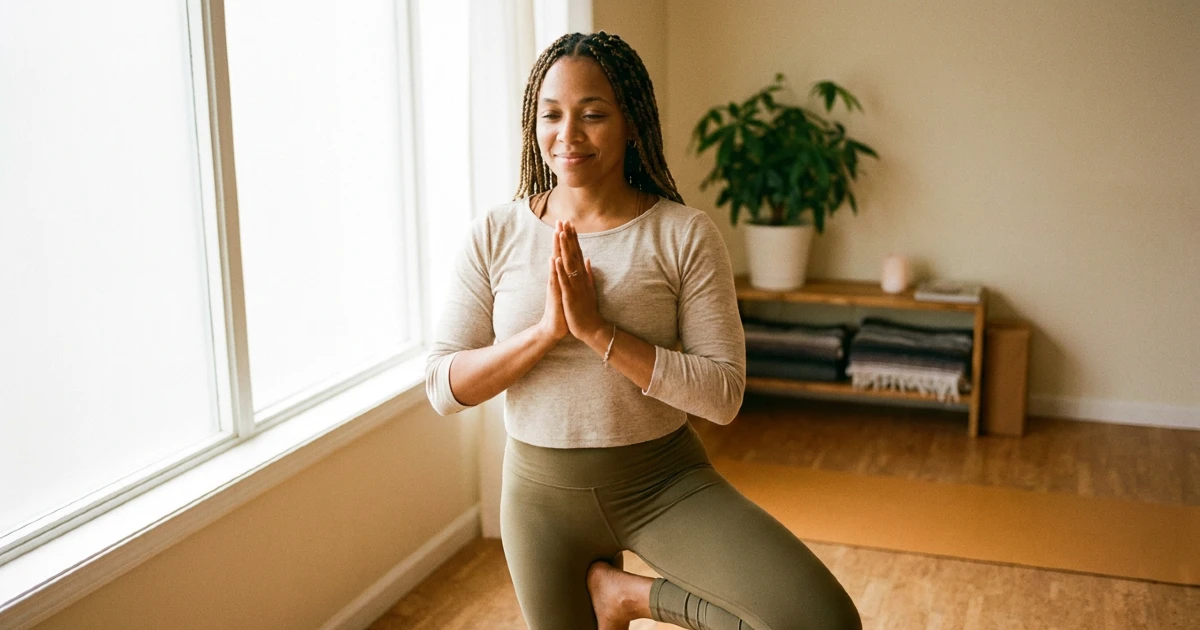
Consider tree pose. You stand on one leg while the “wind” of change moves around you. Your standing leg wobbles. Your mind offers a running commentary.
Yet with steady attention and breath, you begin to find sthira sukham asanam – steadiness and ease, even in the midst of movement and uncertainty.
The roots stay grounded while the branches adapt.
Isn’t that exactly what change asks of us?
Yoga and change are deeply connected because yoga continually reminds us that everything is in constant flux. Clinging to the old booking flow is a little like trying to hold onto last week’s savasana – sweet while it lasted, but already gone.
The invitation is always the same: meet what’s here now with presence rather than resistance.
Moving through this together
At SPACE Yoga, we chose the new booking system because we genuinely believe it will serve you better.
But we also know that “better in the long run” doesn’t erase the very real discomfort that often comes with transition.
To help make things easier:
- A simple step-by-step guide is now available on the booking page.
- If anything feels confusing or you get stuck, simply reply to your confirmation email or send me a message. I’ll happily walk you through it personally.
The bigger invitation
Understanding why change feels hard doesn’t necessarily make it disappear. But it can help us meet ourselves with a little more compassion when life inevitably shifts beneath our feet.
Perhaps this small change in how we book our classes is really an invitation to practise exactly what we explore on the mat every week.
Growth often lives just beyond discomfort.
The mind may resist at first, but we’re usually far more adaptable than its initial reaction would have us believe.
The new system isn’t perfect. And neither are we.
But we’ll move through this transition in exactly the same way we move through every challenging pose – with breath, patience and a willingness to begin again.
Thank you for your trust, your feedback and your presence.
Whether you’ve already tried the new system or you’re still circling it with curiosity (or even resistance), you’re exactly where you need to be.
Further reading
If you enjoyed this article, you might also enjoy…
- Benefits of yoga: Science vs experience – Explore how modern psychology and ancient wisdom often arrive at the same conclusions about wellbeing.
- How do you recover from burnout? 6 steps to rest & recharge – Discover why slowing down can be the first step towards lasting resilience.
- Think you can’t meditate? Think again! – Learn how meditation can help calm the mind and navigate life’s inevitable ups and downs.
- The Taoist way: Balancing work and life – A gentle reflection on embracing life’s natural rhythms rather than resisting them.
Enjoy thoughtful reflections on yoga, wellbeing and everyday life? Join the Making Space email list for inspiration, practical insights and gentle reminders to create more space for yourself.
FAQs about why change feels hard
1. Why does change feel so hard, even when it’s a positive change?
Our brains are wired to prefer what’s familiar because it feels safe and predictable. Even positive changes create uncertainty, which can trigger stress or resistance until the new situation becomes familiar.
2. What does yoga philosophy say about change?
Yoga philosophy teaches that change is a natural part of life. Rather than resisting it, practices such as abhyasa (steady practice) and vairagya (non-attachment) encourage us to meet change with patience, presence and compassion.
3. Why do I resist change when I know it’s good for me?
Resistance to change is a normal human response. It doesn’t mean you’re doing anything wrong. Often, your mind is simply trying to protect you from uncertainty. With time, practice and self-compassion, new habits begin to feel more comfortable.
4. How can yoga help me cope with change?
Yoga helps regulate the nervous system, calm the mind and build resilience. Through movement, breathwork and meditation, we learn to stay grounded even when life feels uncertain or unfamiliar.
5. Why did SPACE Yoga change its booking system?
We introduced a new booking system to create a smoother, simpler experience for our community. While we know any change can take a little getting used to, we believe the new system will make booking classes easier in the long run. And if you ever need a hand, we’re always happy to help.